The Smart Factory Evolution
Manufacturing has always been about precision, throughput, and minimizing operational overhead. However, even the most streamlined factories face two massive profit leaks: unplanned machine downtime and manual quality control checks that permit defective products to ship out.
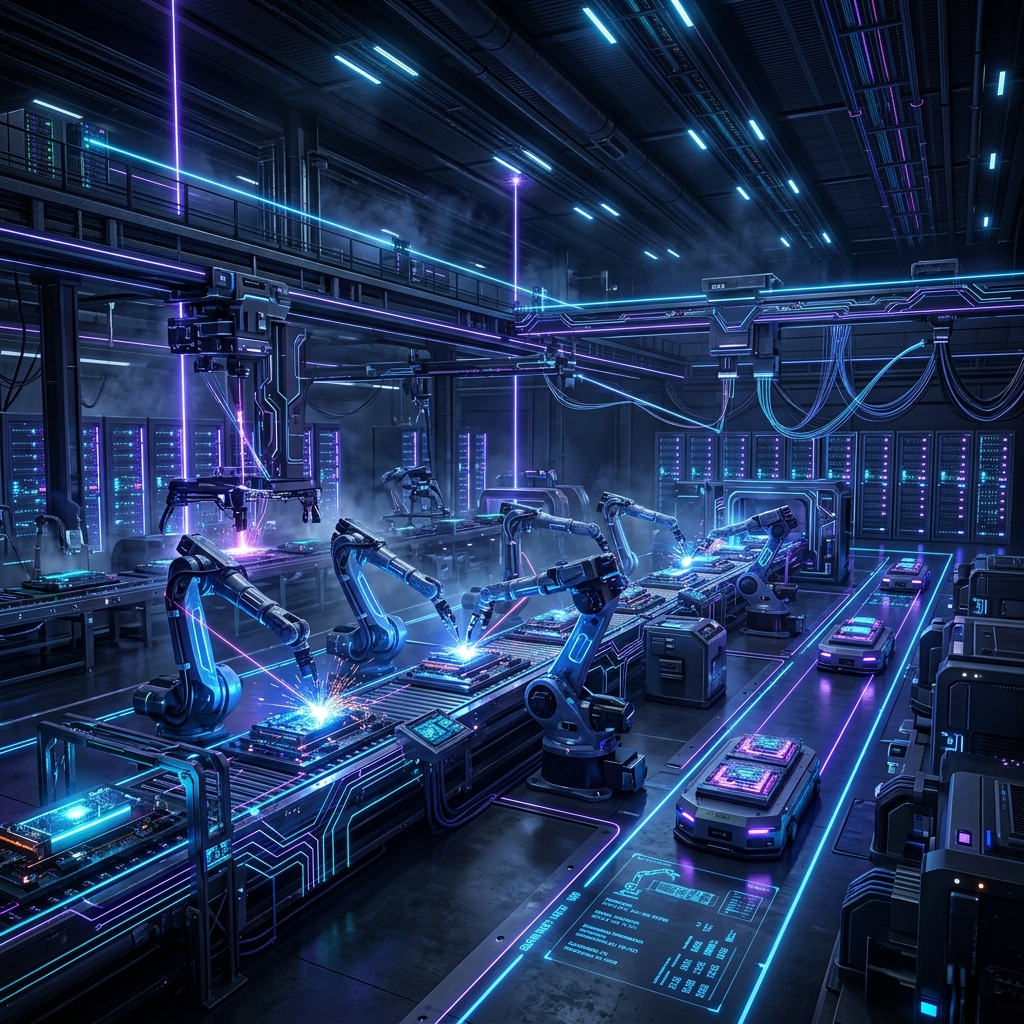
Artificial Intelligence (AI) and Edge computing are turning traditional manufacturing lines into highly optimized, self-correcting smart factories. Here is a breakdown of how industrial operators are deploying AI right now to supercharge operational efficiency.
1. Predictive Maintenance Over Reactive Fixes
When a primary assembly line machine fails on a factory floor, the financial damage is immediate—stalled operations, delayed shipping manifests, and expensive emergency technician labor. Traditional maintenance relies on arbitrary schedules (e.g., checking a machine every 90 days).
AI-driven predictive maintenance utilizes IoT sensors to monitor machine telemetry (vibration frequencies, temperature spikes, electrical draw) in real-time. By comparing this live data against historical breakdown markers, the AI predicts mechanical failures up to two weeks before they actually happen. The system automatically shifts preventative maintenance orders to the next scheduled overnight shift, completely eliminating unplanned gridlocks.
2. Computer Vision for Quality Assurance
Human inspectors get tired, distracted, and suffer from visual fatigue. When inspecting thousands of parts per shift, defects slip through. AI-driven computer vision utilizes high-speed industrial cameras overlaying the assembly line. Every single part is photographed and analyzed by an AI model trained on microscopic defect indicators in milliseconds.
Defective units are instantly flagged and blown off the conveyor belt by automated air jets, guaranteeing a literal 100% inspection rate and dramatically lowering product returns.
3. Supply Chain & Demand Forecasting
Over-producing inventory wastes valuable warehouse capital; under-producing results in lost client revenue. AI engines analyze global logistics metrics, raw material pricing, historical sales cycles, and local shipping indexes to forecast exact production demands weeks in advance. This allows manufacturing plants to order raw materials just-in-time, keeping warehouse overhead exceptionally low.
Bridging Local Factory Networks with the Cloud
Deploying AI in industrial settings requires specialized local networking architectures to process massive sensor feeds without latency. ZenTek USA specializes in building high-performance, ruggedized industrial networking environments and edge server deployments. We bridge your local manufacturing operations safely to secure cloud databases. Contact our industrial engineers today to audit your factory floor's AI readiness.